Treatment 02 — the discreet route
Clear aligners, with the conditions stated plainly.
Aligners straighten teeth through a staged series of clear, removable trays — no brackets, no wires, nothing to see in photographs. They work beautifully, but only under two conditions: the right case, and a wearer who actually wears them.
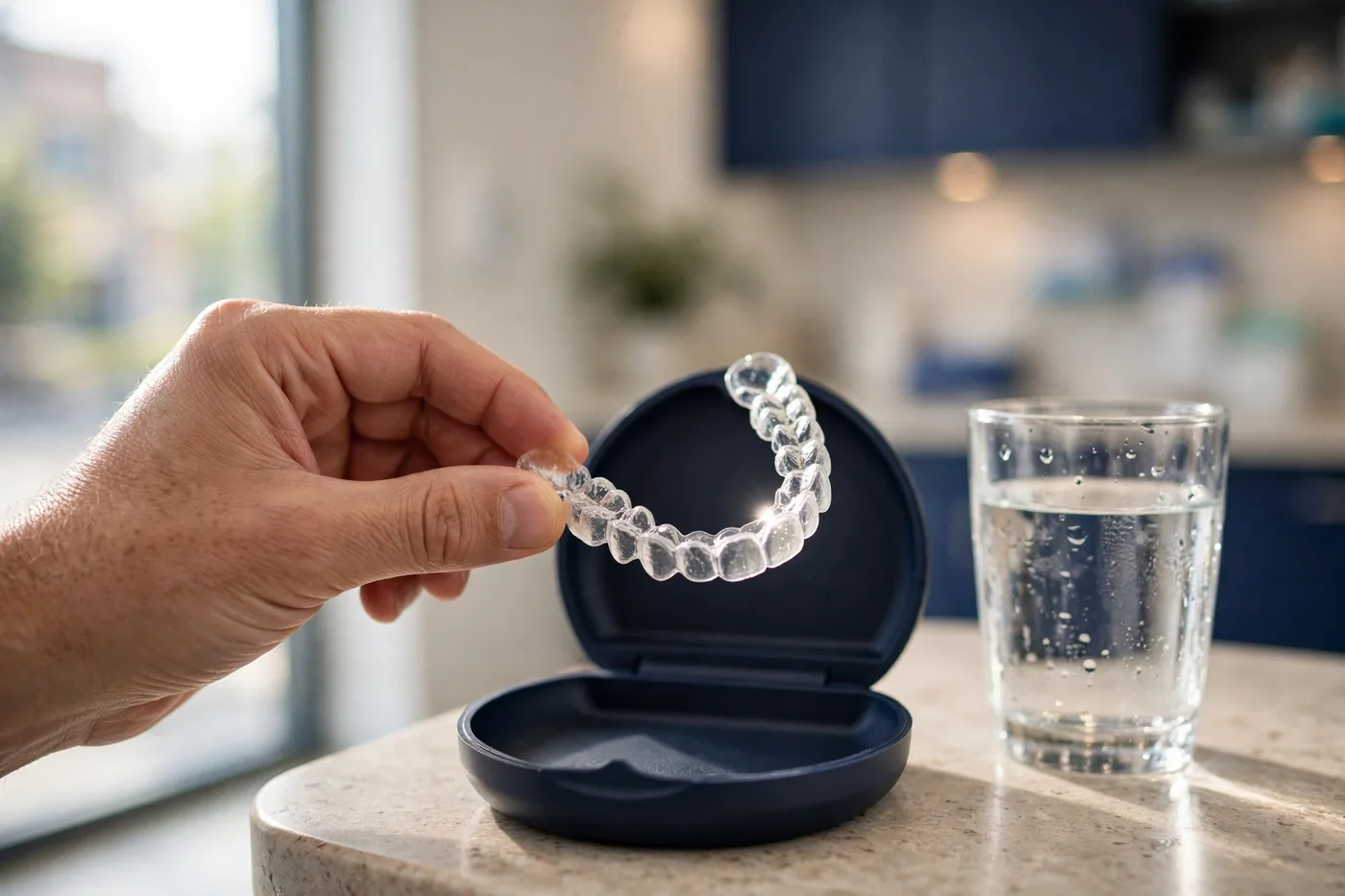
What it is
Many small moves, mapped in advance
Each aligner is moulded to your teeth as they should be at the end of that stage — a fraction of a millimetre ahead of where they are. Worn in sequence, the trays walk your teeth along the plan. Because they're removable, you eat what you like and brush and floss normally.
That freedom is also the catch. Out of your mouth, aligners do nothing — which is why an orthodontist, not a salesperson, should tell you whether they're right for you.
Who it suits
- ✓Mild to moderate crowding or spacing
- ✓Working adults and students who want discretion
- ✓People who'll genuinely wear them 20–22 hours daily
- ✓Relapsed cases — teeth that drifted after past braces
Complex bite problems may still need braces, or a combination. The assessment is where that's decided — honestly, even if the answer is the less glamorous appliance.
The process
How aligner treatment runs
Suitability first
Examination and records decide whether your bite can be corrected with aligners at all — not every case can, and you'll be told if yours can't.
The staged plan
Your treatment is divided into stages, each a pair of trays moving teeth a small, planned amount. You see the sequence before you start.
Tray by tray
Wear each set 20–22 hours a day, removing them only to eat and brush. Change to the next set as directed — usually every one to two weeks.
Hold the line
Like braces, aligner treatment ends with retainers. Teeth don't know how they got straight — they only know how to drift back.
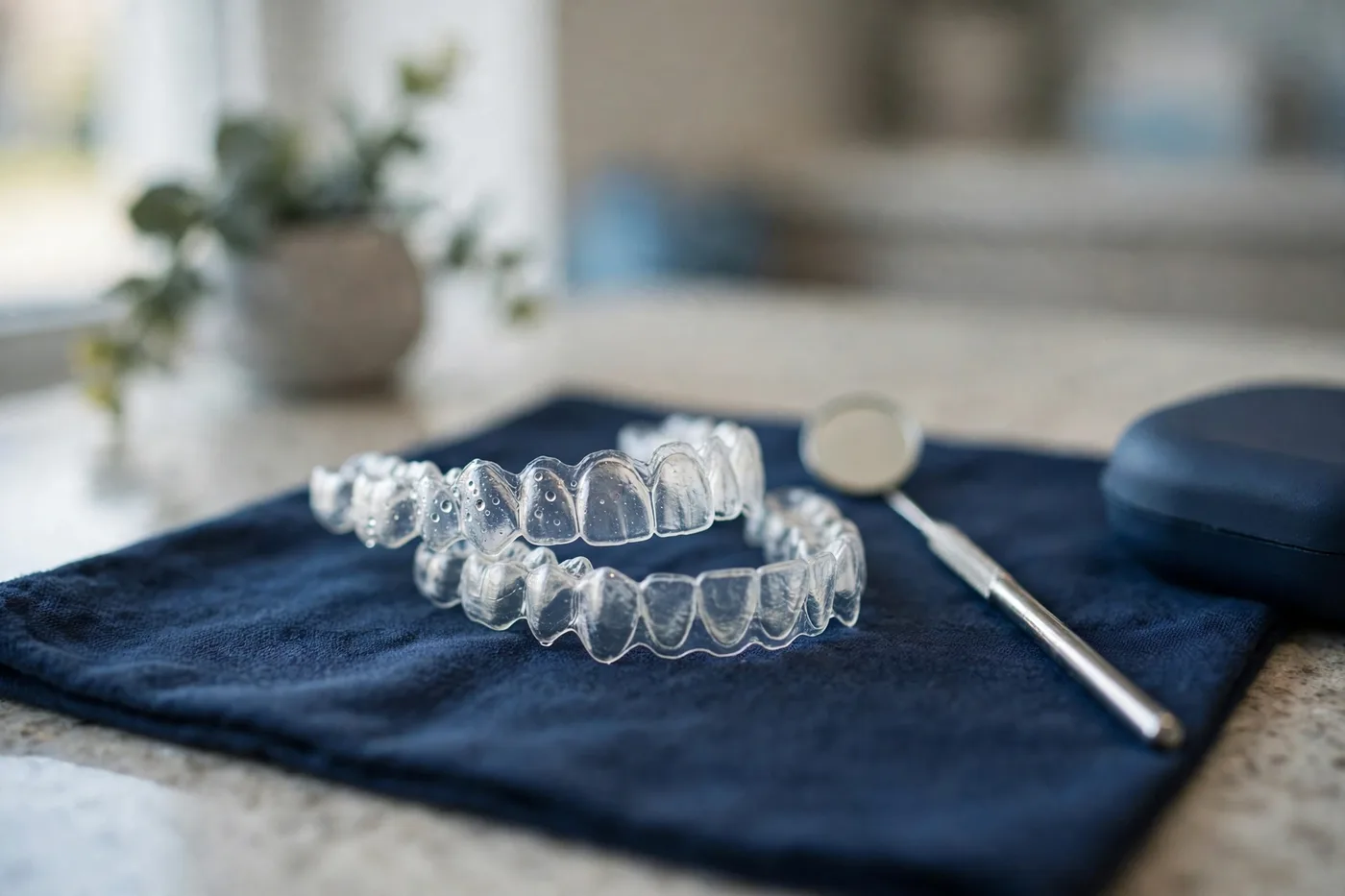
Fig. — One stage, upper and lower trays
Honest pricing
What aligners cost depends on
Aligner pricing follows the size of the plan. Three factors decide it — and all three are known once your case is assessed and the sequence is designed.
Depends on — 1
Number of stages
More movement means more trays. A short relapse case and a full correction are priced very differently because they are different amounts of treatment.
Depends on — 2
Case complexity
Rotations, bite correction and attachments add planning and chair time. Your orthodontist will flag these before the estimate, not after.
Depends on — 3
Refinements
Teeth occasionally need a short extra sequence at the end to finish perfectly. How refinements are handled is explained upfront, in the plan.
Aligner questions
Asked at the clinic
At normal conversation distance, aligners are very hard to spot — that's their main appeal. Small tooth-coloured attachments are sometimes bonded to help certain movements; they're discreet too, and your orthodontist will show you if your case needs them.
Most people notice a slight lisp for the first day or two while the tongue adjusts. It passes as speaking becomes automatic again.
Call the clinic promptly. Depending on where you are in the sequence, you'll be advised to move to the next tray or have the lost one remade — the plan has room for this, but delays stretch the timeline.
Honestly: the teeth won't move as planned, trays stop fitting, and treatment stalls or needs rescanning. Aligners are an agreement — the clinic plans, you wear. Braces are the better choice if 20–22 hours a day sounds unrealistic.
Start with an assessment
Not sure your case suits aligners?
That's exactly what the assessment answers. If aligners will work, you'll see the staged plan. If they won't, you'll hear that too — with the alternative explained.