Most chosen
Metal braces
The classic stainless-steel system: smallest brackets, the widest range of correction, and usually the most economical. Coloured elastics make them a favourite with younger patients.
Treatment 01 — the flagship
Fixed braces remain the most capable way to correct crooked teeth and faulty bites — in teenagers and adults alike. At Vimalai they're planned and supervised by a specialist orthodontist, Dr. Gananjay Patil.
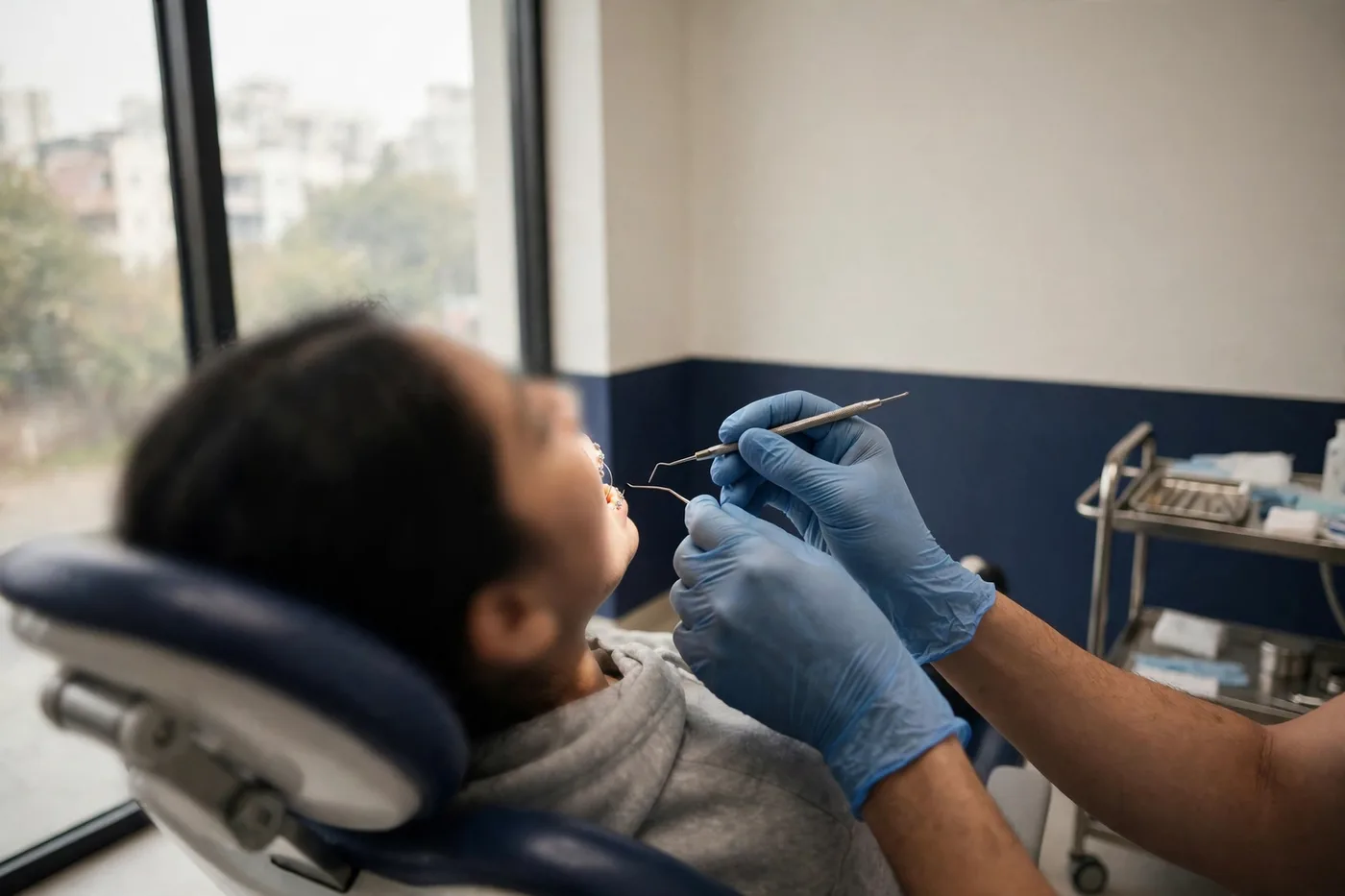
What it is
A bracket is bonded to each tooth and a wire runs through them all. The wire — changed in stages from light and flexible to firm — applies gentle, continuous pressure, and teeth move through the bone a fraction of a millimetre at a time. Elastics and other auxiliaries are added when the bite itself needs correcting.
The appliance is simple. The skill is in the sequence — which is why orthodontics is a specialisation, and why your plan here is drawn by an MDS orthodontist rather than fitted by rote.
Who it's for
Adult braces are routine. What decides suitability is the health of your teeth and gums, not your age.
The process
Examination, photographs and X-rays as needed. The bite is analysed — not just how the teeth look, but how they meet.
Each tooth's movement is mapped: which teeth move, in what order, whether any space needs to be made. Timeline and written estimate shared with you.
Brackets are bonded and the first light wire placed. You'll learn cleaning around them and what to expect in week one.
Reviews every 4–6 weeks as wires step up. When alignment is reached, retainers hold the result — for as long as you want it to last.
The options
Which family suits your case, lifestyle and budget is decided at assessment — the movement plan comes first, the hardware second.
The classic stainless-steel system: smallest brackets, the widest range of correction, and usually the most economical. Coloured elastics make them a favourite with younger patients.
Tooth-coloured brackets that blend in at conversation distance. The same mechanics as metal, with a discreet look working adults often prefer.
Brackets with a built-in clip instead of elastic ties. Some cases benefit from easier wire changes and cleaning — your orthodontist will say if yours is one.
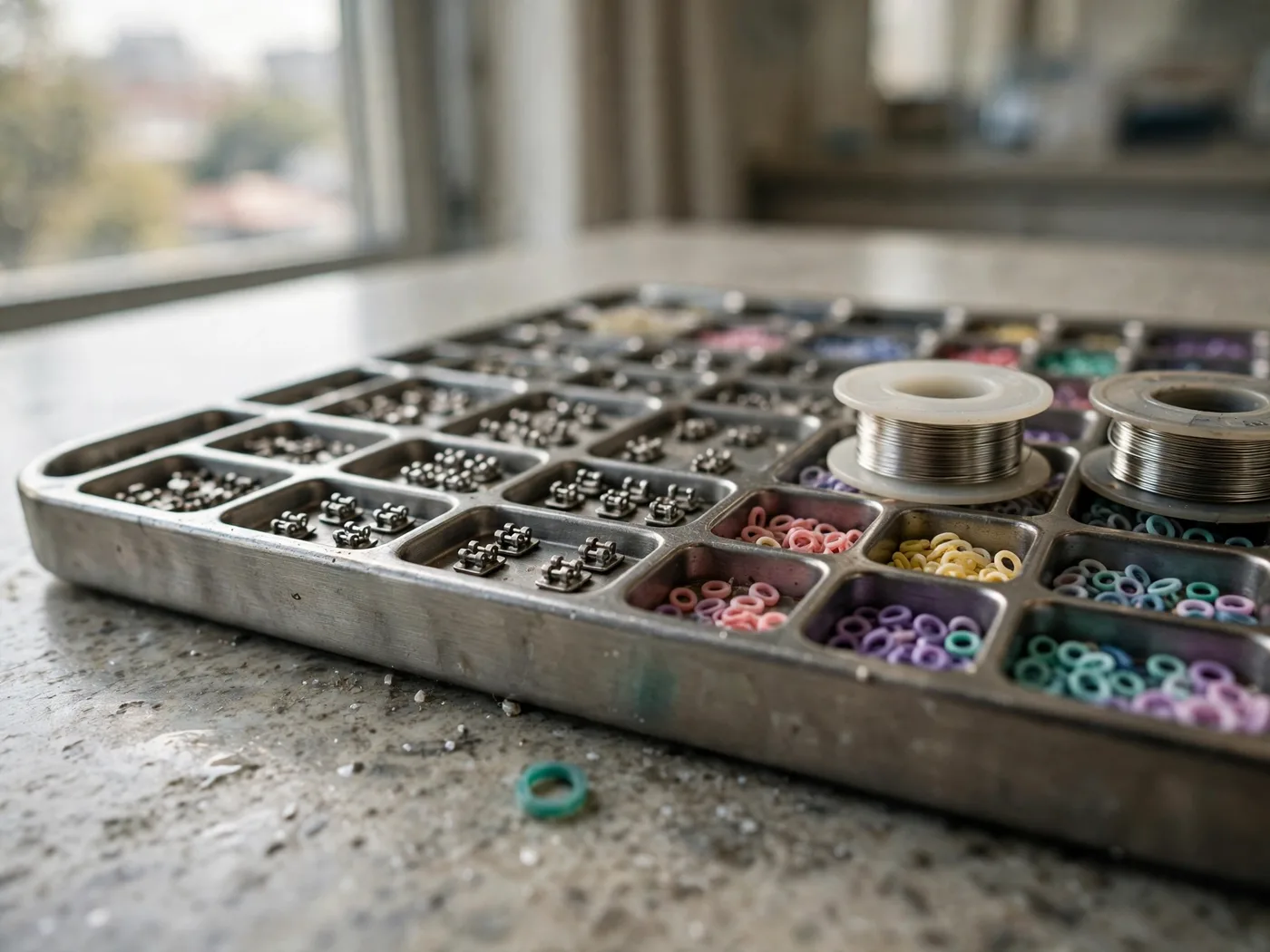
Fig. — Brackets, archwires and ligatures, laid out for a fitting
Honest pricing
Anyone quoting a flat price without seeing your teeth is guessing. These three factors set the real number — you'll get yours in writing after assessment.
Depends on — 1
Mild crowding and a severe bite problem are different amounts of work. Complexity sets the treatment length, and length drives cost.
Depends on — 2
Metal, ceramic and self-ligating systems carry different material costs. The plan may suit one better than the others.
Depends on — 3
Records, any extractions the plan genuinely requires, auxiliaries for bite correction, and the retainers that finish the job.
Braces questions
Fitting brackets and the first wire is not painful. For a few days after fitting — and briefly after each adjustment — teeth can feel tender as they begin to move. Soft food and patience cover most of it; it settles.
Reviews are typically every 4–6 weeks, when the wire is checked or changed and progress is measured against the plan. Most visits are short.
Very hard foods (ice, hard candy, biting into whole hard fruit) and very sticky ones can break brackets or bend wires. Most everyday food is fine with a little care — you'll get a clear list at fitting.
Yes — teeth have a memory and drift back without them. Retainers are part of the treatment plan from day one, not an optional extra sold at the end.
Start with an assessment
An assessment will tell you whether braces are needed, which type fits, and what it will cost — in writing, before you commit to anything.